tmpnam_s.c File Reference
#include "safe_lib.h" Include dependency graph for tmpnam_s.c: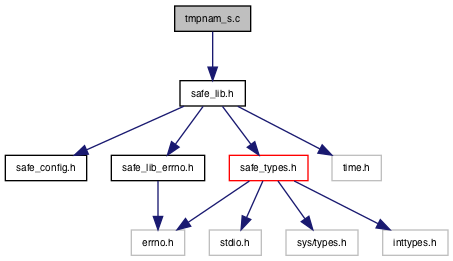
Functions | |
| EXPORT errno_t | tmpnam_s (char *filename_s, rsize_t maxsize) |
| Creates a unique valid file name (no longer than L_tmpnam in length) and stores it in character string pointed to by filename. More... | |
Function Documentation
◆ tmpnam_s()
| EXPORT errno_t tmpnam_s | ( | char * | filename_s, |
| rsize_t | maxsize | ||
| ) |
Creates a unique valid file name (no longer than L_tmpnam in length) and stores it in character string pointed to by filename.
The function is capable of generating up to TMP_MAX_S of unique filenames, but some or all of them may be in use in the filesystem and thus not suitable return values.
- Remarks
- SPECIFIED IN
- C11 standard (ISO/IEC 9899:2011): K.3.5.1.2 The tmpnam_s function (p: 587-588) http://en.cppreference.com/w/c/io/tmpnam
- Deprecated in favor of mkstemp
- Parameters
-
[out] filename_s pointer to the character array capable of holding at least L_tmpnam_s bytes, to be used as a result buffer. [in] maxsize maximum number of characters the function is allowed to write (typically the size of the filename_s array).
- Precondition
- No more than TMP_MAX_S files may be opened
- filename_s is a null pointer
- maxsize is greater than RSIZE_MAX_STR
- maxsize is less than the generated file name string
- Returns
- Returns zero and writes the file name to filename_s on success. On error, returns non-zero and writes the null character to filename_s[0] (only if filename_s is not null and maxsize is not zero and is not greater than RSIZE_MAX_STR).
- Return values
-
EOK on success ESNULLP when filename_s is a NULL pointer ESZEROL when maxsize = 0 ESLEMAX when maxsize > RSIZE_MAX_STR or more than TMP_MAX_S files were opened. errno() when tmpnam() failed, typically -ENOENT
- Note
- Although the names generated by tmpnam_s are difficult to guess, it is possible that a file with that name is created by another process between the moment tmpnam returns and the moment this program attempts to use the returned name to create a file. The standard function tmpfile and the POSIX function mkstemp do not have this problem (creating a unique directory using only the standard C library still requires the use of tmpnam_s).
POSIX systems additionally define the similarly named function tempnam(), which offers the choice of a directory (which defaults to the optionally defined macro P_tmpdir).